
By Dr. John L. Ferrell III, M.D.(*)
⚡ Quick Answer: Healing Shoulders with MFAT
If you are struggling with a rotator cuff tear, here is why our research-backed MFAT treatment is a game changer:
- Beyond Steroids: Unlike cortisone, which can weaken tendons over time, MFAT focuses on biological repair.
- Your Own Biology: We use Autologous Microfragmented Adipose Injections (fat) which are rich in regenerative cells.
- Faster Recovery: Many patients return to physical therapy in about a month, avoiding the six month recovery window typical of surgery.
- Award Winning Research: Our team at ROSM is currently conducting a prestigious study funded by the Maryland Stem Cell Research Fund.
If you have ever winced while reaching for a high shelf or struggled to find a comfortable sleeping position because of your shoulder, you are not alone. Rotator cuff tears are one of the most common causes of pain and disability as we age. For years, the standard roadmap has been predictable: start with physical therapy, try a cortisone shot, and if those fail, prepare for the operating room.
But what if we could do more than just mask the pain? What if we could actually help the body repair the damage? At Regenerative Orthopedics and Sports Medicine (ROSM) and the Orthobiologic Research Initiative (ORI), we are working to turn that “what if” into a reality. We are thrilled to announce that our team has received a prestigious grant from the Maryland Stem Cell Research Fund (MSCRF) to pioneer innovative ways to treat rotator cuff tears using regenerative medicine.
The Cortisone Catch-22
For decades, cortisone injections have been the go-to for shoulder inflammation. While they are undeniably effective at providing quick pain relief, there is a catch. Research increasingly shows that while cortisone quiets the fire, it can also weaken the very tendons and ligaments it is meant to help. In some cases, repeated injections can actually make tears larger or more brittle. It is a temporary patch that may come at a long term cost.
Healing from Within: The Power of Adipose Tissue
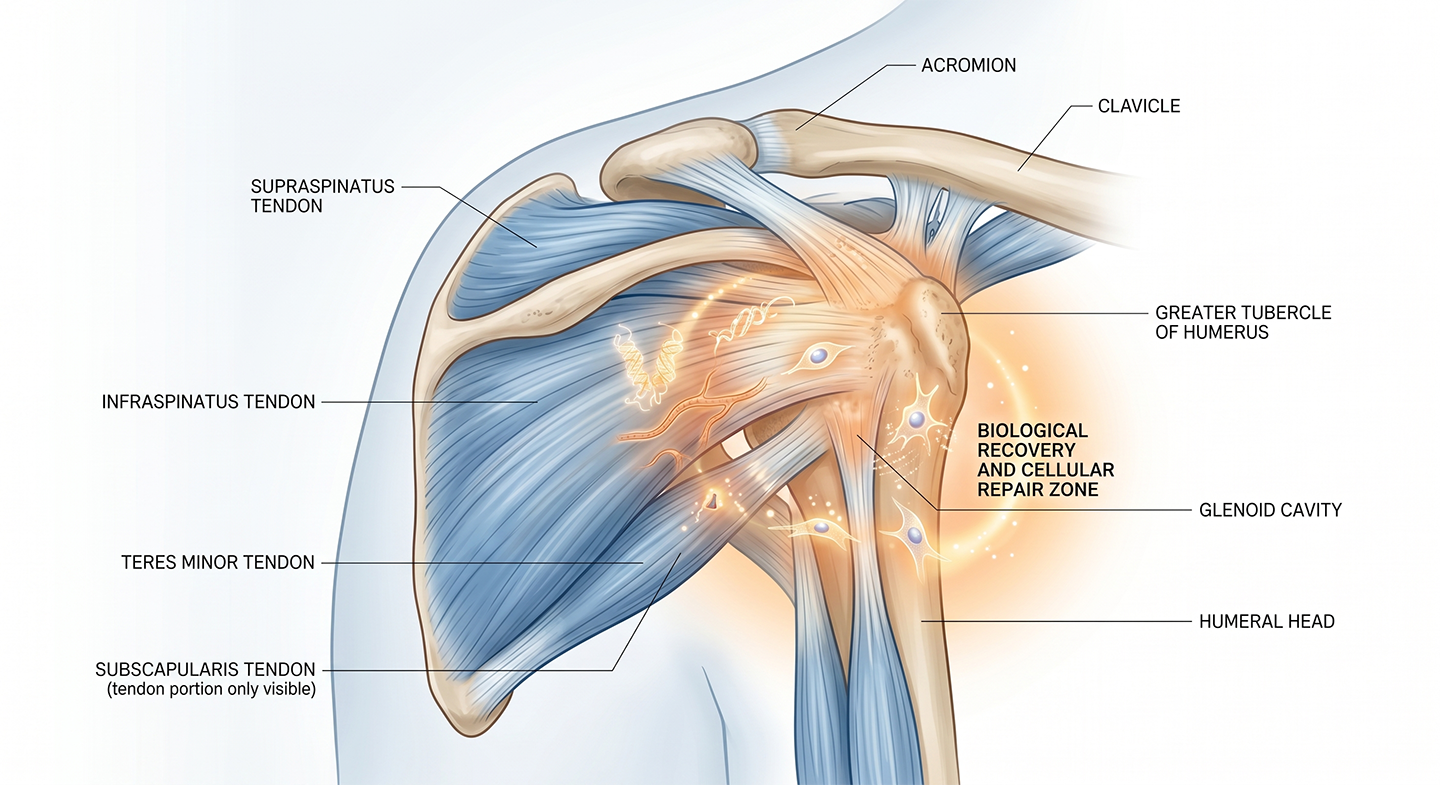
Instead of relying on synthetic steroids, our research focuses on autologous microfragmented adipose tissue (MFAT). This process involves using the healing power found in your own body’s fat. Adipose tissue is a rich, robust source of regenerative cells and growth factors that act as a biological fertilizer for your joints.
The process is straightforward and minimally invasive:
- A Simple Harvest: A small amount of fat is collected, usually from the abdomen or flank.
- Microfragmentation: The tissue is cleaned and resized to preserve the natural healing environment without using harsh chemicals.
- Precision Injection: Using advanced Musculoskeletal Ultrasound guidance, we deliver these cells directly into the tear.
The goal is not just to decrease pain. It is to biologically jumpstart the repair process, strengthening the tendon and potentially decreasing the need for invasive surgery. We have seen success with similar approaches for other joints, as detailed in our article on managing knee arthritis.
Why This Research Matters
This Maryland Stem Cell Grant allows us to dive deeper into the science of healing. We are not just looking for a better shot. We are looking for a way to restore function and quality of life by addressing the root cause of the injury. By utilizing your own cells, we minimize the risk of rejection and maximize the potential for long term recovery.
“Our mission is to move beyond managing pain and start mastering repair. This grant is a massive step forward for patients who want to avoid the operating table and get back to the activities they love.”
Join the Future of Orthopedics
If you are tired of the cycle of temporary relief and are interested in learning more about our groundbreaking study, we want to hear from you. You do not have to settle for chronic pain or invasive procedures as your only options.
Ready to walk a new path to healing? Schedule a consultation at one of our locations in DC, Maryland, or Virginia.