

By Dr. John L. Ferrell III, M.D.(*)
⚡ Clinical Insight: Nerve Regeneration
If you are living with the burning or numbness of neuropathy, here is how PRP changes the treatment equation:
- Targets the Root Cause: While pills “mute” the pain, PRP aims to repair the protective myelin sheath and the nerve fiber itself.
- Restores Vital Blood Flow: PRP triggers angiogenesis, which brings oxygen and nutrients back to “starved” nerve tissue.
- Scientifically Proven: Clinical trials show significant, long-term reduction in numbness and improved nerve conduction after treatment.
- Precision is Key: We use real-time Musculoskeletal Ultrasound to ensure growth factors are delivered exactly where the nerve is inflamed.
If you have been living with peripheral neuropathy, you have likely tried a range of treatments, from prescription medications and physical therapy to dietary supplements and topical creams. While these approaches can offer some relief, they share a common limitation: they address the symptoms of nerve damage without doing anything to repair the nerves themselves.
Platelet-Rich Plasma (PRP) therapy is changing that equation. At Regenerative Orthopedics and Sports Medicine (ROSM), PRP is one of our most powerful tools for treating peripheral neuropathy, and the science behind it is genuinely exciting. This post explains exactly what PRP is, how it works to heal damaged nerves, and what clinical research tells us about its effectiveness as a natural neuropathy treatment.
What Is PRP and Where Does It Come From?
Platelet-Rich Plasma is an autologous biologic therapy, meaning it is made entirely from your own blood. At our practice, the process is straightforward and takes place right in the office. First, a small amount of blood is drawn from your arm, similar to a routine test. That blood is placed into a specialized centrifuge to isolate a concentrated serum rich in platelets and powerful growth factors.
Platelets are your body’s natural “first responders” to injury. By concentrating millions of platelets into a small volume of plasma, we create a potent therapeutic agent. We then deliver these cells to the site of nerve damage using advanced Musculoskeletal Ultrasound guidance.
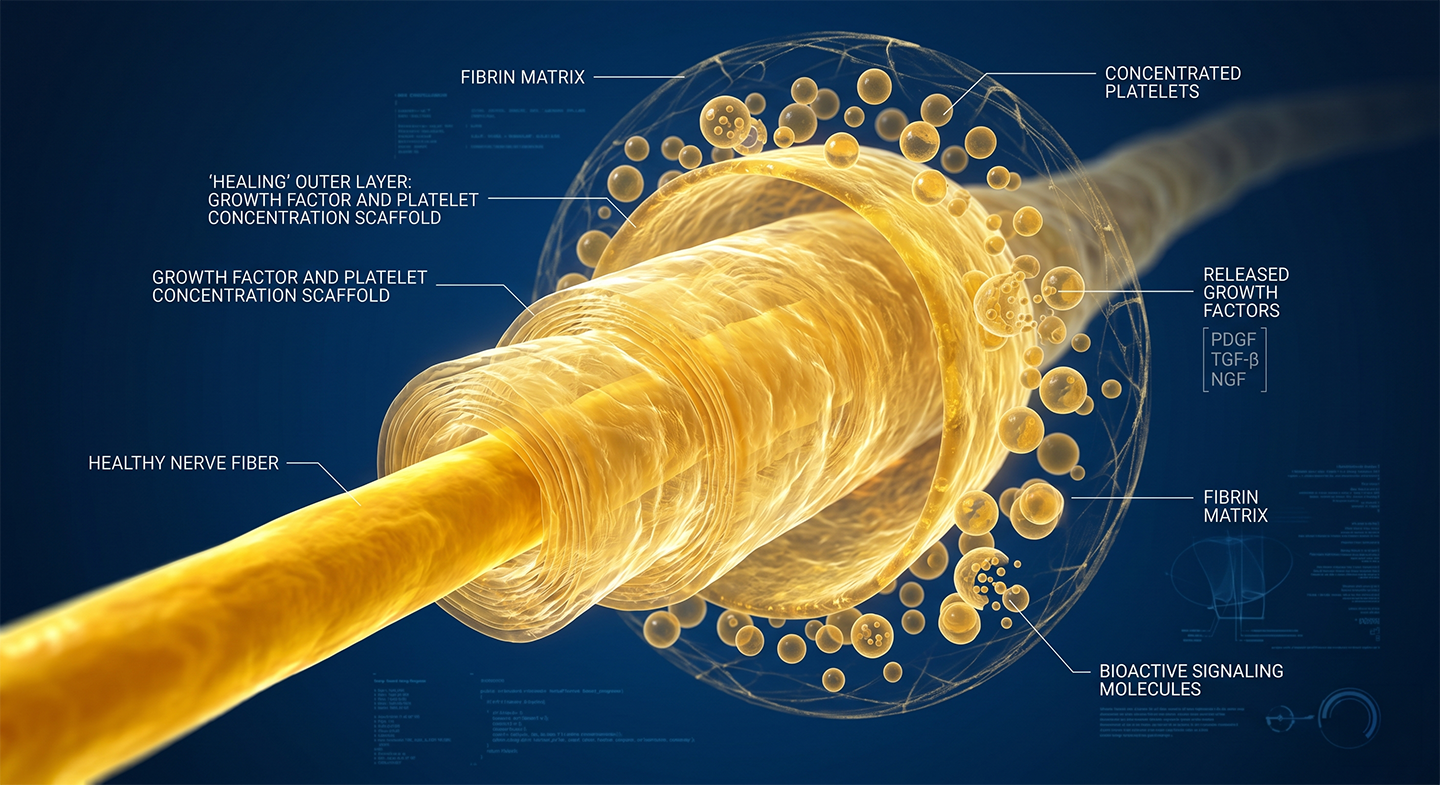
How PRP Heals Peripheral Nerves
When injected around an injured or inflamed nerve, a technique known as perineural injection, PRP triggers a remarkable sequence of healing events. Through our research initiatives, we track how these treatments promote nerve recovery by focusing on several key areas:
- Reducing Nerve Inflammation: PRP contains anti-inflammatory cytokines that calm chronically inflamed nerves, measurably reducing swelling.
- Stimulating Schwann Cells: These cells produce and maintain the myelin sheath, the protective layer that allows nerve signals to travel. PRP actively stimulates these cells to migrate to the injury site.
- Promoting Axon Regeneration: Growth factors directly stimulate the structural repair of the nerve fiber (axon). Clinical studies have confirmed that PRP-treated nerves show thicker myelin sheaths.
- Restoring Blood Supply (Angiogenesis): This process effectively “re-feeds” nerve tissue that has been starved of oxygen and nutrients.
This approach aligns with our overall mission of Joint Preservation and natural healing, as we move away from the “mute button” approach of conventional medications.
What Does the Clinical Evidence Show?
The clinical evidence for perineural PRP for neuropathy is particularly compelling. In rigorous clinical trials, patients receiving ultrasound-guided PRP injections showed significantly greater improvements across every measure compared to those on standard medical care alone. These patients experienced lower pain scores, reduced numbness, and improved nerve conduction that continued to develop over a six month period. This suggests that the benefits of PRP are not temporary; they reflect genuine, progressive nerve healing.
PRP for Neuropathy: At a Glance
| Feature | Details |
|---|---|
| Source | Your own blood (Autologous) |
| Procedure | Ultrasound-guided perineural injection |
| Primary Mechanisms | Reduces inflammation, regenerates axons, restores blood flow |
| Clinical Evidence | Significant improvement in pain, numbness, and function |
| Safety Profile | Excellent; no risk of rejection or allergic reaction |
Is PRP Right for You?
PRP therapy is an excellent option for patients with mild to moderate peripheral neuropathy who want to slow or reverse nerve damage. It is also a powerful alternative for those with severe neuropathy seeking to avoid long term medication use. To see how this fits into your larger care journey, you can read more about how we help patients avoid surgery for chronic joint pain.
Ready to walk a new path to healing? Schedule a consultation at one of our locations in DC, Maryland, or Virginia.